How to survive the medical intern year in India as a MBBS intern

Surviving the medical intern year in India comes down to one thing: understanding what the year is actually doing to you while it is happening, so that you can stay inside it without losing the part of yourself that chose medicine in the first place. The MBBS intern year in India is not designed to be comfortable. It is designed to be formative. And the two are not the same thing.
Most guides on intern year survival tell you to sleep well, stay organised, and remember your purpose. You already know all of that. What you do not have is a clear picture of what is happening inside the year, posting by posting, month by month, and what it actually means when the ward puts you through something the textbook never mentioned. That is what this is.
The MBBS intern year in India is the only year in a doctor's training where clinical growth and emotional crisis happen in the same shift, sometimes in the same patient encounter, and the system offers no protocol for either.
What the MBBS intern year in India actually is
The intern year is a 12-month rotating clinical internship across medicine, surgery, paediatrics, obstetrics and gynaecology, orthopaedics, psychiatry, and community medicine. On paper it is structured. In practice, knowing how to survive the intern year in India means understanding that each posting arrives with its own culture, its own hierarchy, its own unwritten rules, and its own version of the same question: what do you actually know?
The answer, in every posting, is the same. Less than the ward needs and more than you give yourself credit for. That tension is the texture of the intern year. It does not resolve by month 3. It does not resolve by month 9. It changes shape across the postings, but it does not go away. The interns who come through the year with their sense of purpose intact are not the ones who found a way to eliminate the tension. They are the ones who learned to work inside it.
In Indian teaching hospitals, the hierarchy is structural, not incidental. The consultant is at the top. Below them, senior residents, junior residents, and then you. You are at the bottom of a clinical pyramid that was built before you arrived and will continue after you leave. Your job is not to climb it in twelve months. Your job is to understand what it is teaching you while you are inside it, and to not mistake the structure for the learning.
The six moments that define the MBBS intern year in India
Every intern year, regardless of college, city, or posting sequence, moves through the same six emotional moments. They do not arrive on a schedule. They arrive when the ward decides. What follows is not a prediction. It is a map drawn from what every MBBS intern in India moves through, whether or not anyone ever names it for them.
Naming the six moments of the intern year does not make them easier. It makes them legible. And legible is the first step toward liveable.
Moment 01 : First real responsibility — months 1 to 2
The first time a patient is actually your responsibility. Not in a case presentation. Not in a viva. Actually yours, on the ward, with a case sheet that has your name in it and a treatment plan that you wrote. The fear in that moment is real. The confusion is real. There is no protocol in any Indian medical college for what to feel when clinical responsibility lands on you for the first time.
What this moment is: a threshold, not a test. You are not expected to know everything on day one of your medicine posting. You are expected to show up, stay present, and be honest about what you know and what you do not. That is the entire job in month one. Nothing more is required of you.
Month one ends. The posting continues. And something that felt impossible in week one becomes ordinary by week four. That ordinariness is the first sign the year is working. Then month two arrives, and the ward introduces something the textbook has no chapter for.
Moment 02 : Unwitnessed patient death — months 2 to 4
At some point in the intern year, a patient will die. For most interns in India, this happens during the medicine or surgery posting, sometimes during night duty when the ward is quiet and the family is gathered outside. The system moves on immediately. The death note is written, the body is prepared, the next patient is clerked. Nobody checks on the intern who was standing there.
Grief with no ceremony is one of the most isolating experiences of the intern year. The pressure to appear unaffected is real, because in a hierarchical ward culture, showing distress is read as clinical weakness. Most interns carry this silently through the rest of that posting and the ones that follow. The silence does not mean the experience was not significant. It means the system has not yet built a space for it.
The weight of that silence accumulates. By month 3, it begins to combine with something new. The clinical confusion of the first posting has faded. A different kind of confusion takes its place.
Moment 03 : The embarrassment spiral — months 3 to 5
By month 3, you have been on the ward long enough to feel that you should know more than you do. The confusion of month 1 felt circumstantial. The confusion of month 4 feels personal. A senior asks a question during ward rounds. The answer does not come. The room is quiet. Everyone is watching.
This is the embarrassment spiral, and it is the most common reason interns begin to disengage from the clinical environment during their MBBS internship in India. The fear of being seen not knowing becomes more paralysing than the not knowing itself. If you are in this moment right now, what is actually happening in your brain and why it is not what you think it is worth understanding in detail.
The embarrassment spiral does not last forever. What replaces it is quieter and in some ways harder. The ward gets more familiar. The postings rotate. And somewhere in the middle of the year, the outside world starts to feel like a mirror held at the wrong angle.
Moment 04 : Comparison collapse — months 4 to 7
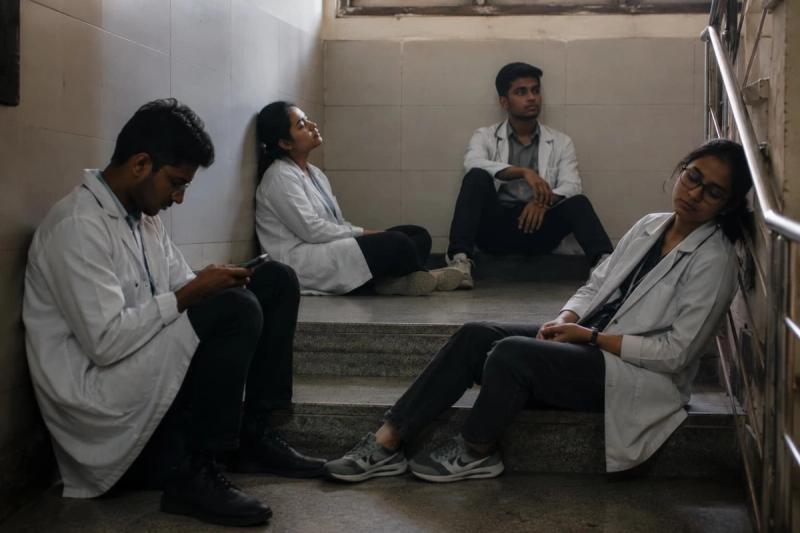
Somewhere in the middle of the year, social media becomes a specific kind of problem. Your batchmates from other colleges are posting about their postings, their procedures, their wins. They look settled. You are on night duty, exhausted, uncertain whether you are learning fast enough. The gap between their apparent reality and yours becomes unbearable in a way that compounds over weeks.
What comparison collapse actually is: a mismatch between your real experience and the performed version of the intern year that circulates in every MBBS batch WhatsApp group in India. The intern who posted about their first successful lumbar puncture is not telling you about the three attempts before it. The curated version of the intern year has almost no relationship to the actual intern year. Almost every intern in that group is running the same private confusion you are, and sharing the edited version instead.
The comparison collapse fades when the second half of the year arrives. The postings have rotated enough that something shifts. The clinical environment, which was only a source of pressure in the first half, starts occasionally producing something else.
Moment 05 : The quiet win nobody saw — months 6 to 9
At some point in the second half of the year, something goes right. A diagnosis you called turns out to be correct. A decision you made independently held up under review. A patient improved and the reason was something you did. The moment of genuine clinical competence arrives, and it arrives quietly, in the middle of a shift that continues regardless.
Nobody sees it. There is no acknowledgement, no moment where the ward round pauses to mark what just happened in you. You carry it alone. Because it is unwitnessed, it evaporates faster than it should. That quiet win is real evidence that the year is doing what it is supposed to do. The fact that the system did not see it does not change what it means.
But the quiet win does not close the year. It arrives in the second half, and then the year continues. And as it approaches its final quarter, exhaustion reaches a different quality entirely.
Moment 06 : The meaning crisis — months 8 to 12
In the final quarter of the intern year, the exhaustion changes character. It is no longer just physical. It becomes existential. The question underneath everything becomes louder: why did I choose this? The intensity of that questioning scales directly with how seriously the intern takes their work. The interns who never ask it are not the ones who are thriving. They are the ones who have stopped being fully present to what they are doing.
The meaning crisis is not a sign that medicine was the wrong choice. It is the specific experience of someone who chose a profession that asks more of them than they anticipated, and who is now inside the process of deciding what that means. Most interns who come through this period come through it with a clearer relationship to why they chose medicine than they had before it started. The question does not destroy the answer. It sharpens it.
What actually helps you get through the MBBS intern year in India
The honest answer is not a system or a routine. The things that actually help during the MBBS intern year in India are simpler and harder than anything a productivity guide will tell you.
Knowing the name of what is happening changes what it means
The six moments above are not weaknesses. They are the structure of the year. When the embarrassment spiral arrives in month 4, knowing it has a name moves it from personal failure to a documented phase that every intern who is paying attention moves through. That is not optimism. That is accuracy. And accuracy is more useful than reassurance.
The most useful person is not the most senior one
Not a consultant. Not a professor. The most useful person during the intern year is an intern who finished their medicine posting two months before you did. The near-peer carries the emotional context of the experience in a way that senior advice cannot, because time compresses memory. The person one step ahead still remembers what it felt like from the inside. That is what makes their insight actually usable.
The WhatsApp group is not showing you the real intern year
Every batch has a group. Every group has the curated version of the year, not the actual one. The intern who appears most settled in that group is running the same private confusion you are running, and sharing the edited version of their experience instead. Comparison in the intern year is almost always a comparison between your real experience and someone else's performed experience. The gap you are seeing does not exist in the way you think it does.
The unwitnessed growth counts even when nobody is watching
When something goes right in a shift, write it down. Not for a portfolio, not for anyone else. For you. The intern year generates an enormous amount of clinical growth that goes completely unwitnessed and therefore completely uncounted by the intern themselves. If you do not count it, it does not exist in your own record of the year. The end of twelve months should produce something that shows you how far you came, not just how far you had to go.
Medcoterie exists because the intern year is irreversible and the growth produced deserves to be witnessed, even when the ward does not stop to do it.
What the intern year is actually building in you
All six moments described above, from the first real responsibility in month one to the meaning crisis in the final quarter, are doing the same thing. They are building a doctor who has been inside clinical reality long enough to know what they do not know, to function under genuine uncertainty, and to care for patients without an exam structure telling them they are right.
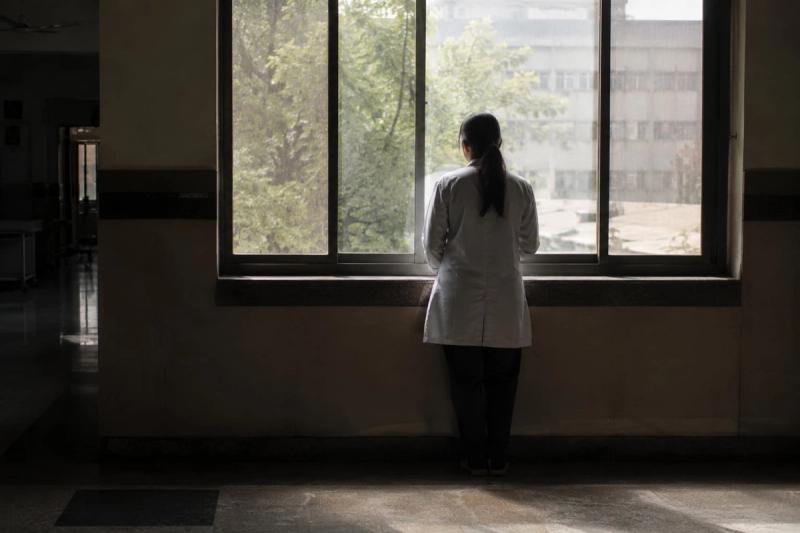
That is an extraordinary thing to construct in twelve months. It does not feel extraordinary while it is happening. It feels like exhaustion and confusion and the specific weight of carrying experiences the system does not acknowledge. But the intern who comes out the other side of the MBBS intern year in India has something that cannot be studied into existence. They have been inside the work. In real conditions. With real patients. And they stayed.
That is not a small thing. In the context of what medicine asks of a doctor across an entire career, it is one of the most important things the training produces. The intern year does not produce a confident clinician. It produces someone who has learned to function inside the absence of confidence, which is what clinical medicine actually requires for the rest of a working life.
Nobody told you what this year would actually feel like. Not the orientation. Not the seniors who said it gets easier. Not the professors who described the posting schedule as though the schedule was the point. You arrived at your first medicine posting or your first surgery posting and the ward was already moving and you had to move with it, without a manual, without a protocol for the parts that mattered most.
Most MBBS interns in India carry the weight of this year without anyone seeing it. The hierarchy does not see it. The system does not see it. The WhatsApp group sees the version you chose to share. What you are actually carrying right now, in whatever month and whatever posting you are in, is real. The fact that it is not acknowledged by the people around you does not make it less so.
You are inside the year that builds the doctor. That is not reassurance. That is just what is true.
More from Jagruthie Sadula
More insights from the founder of CuroLynk.


